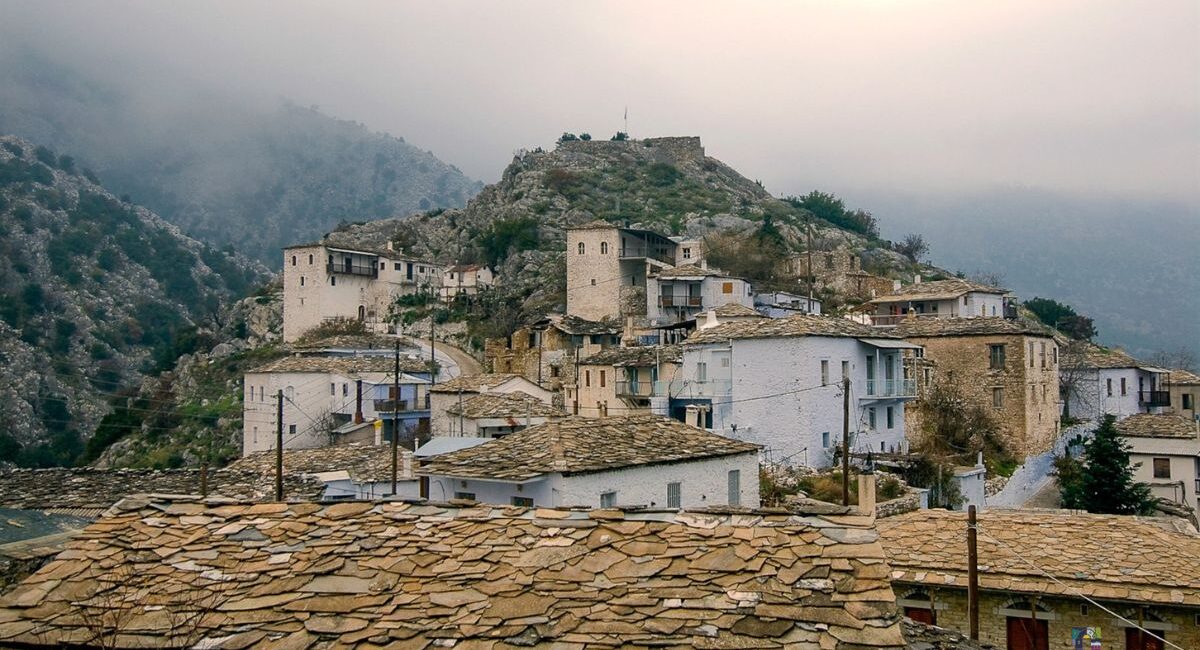
High on the slopes of Mount Parnon, at 840 metres, Kastanitsa is a village of tall grey-stone houses set inside a forest of fir and chestnut trees — its very name comes from kastania, the Greek word for chestnut.
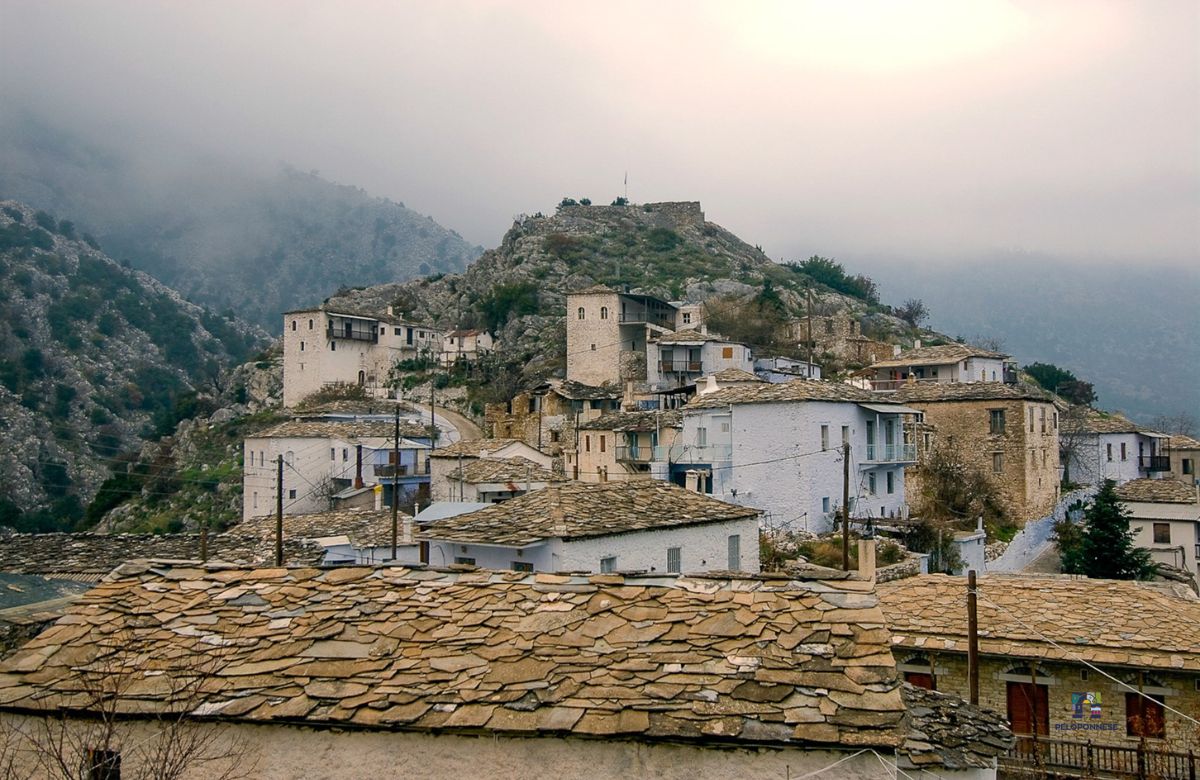
A Tsakonian village
Kastanitsa is first recorded in writing in 1293, though the settlement is believed to be nearly two centuries older, founded by Tsakones fleeing Slavic incursions into the Peloponnese. It holds the distinction of being the first documented village of Tsakonia, the small mountain-and-coast territory that kept its own dialect and building style largely intact for centuries.
Stone houses and a hilltop castle
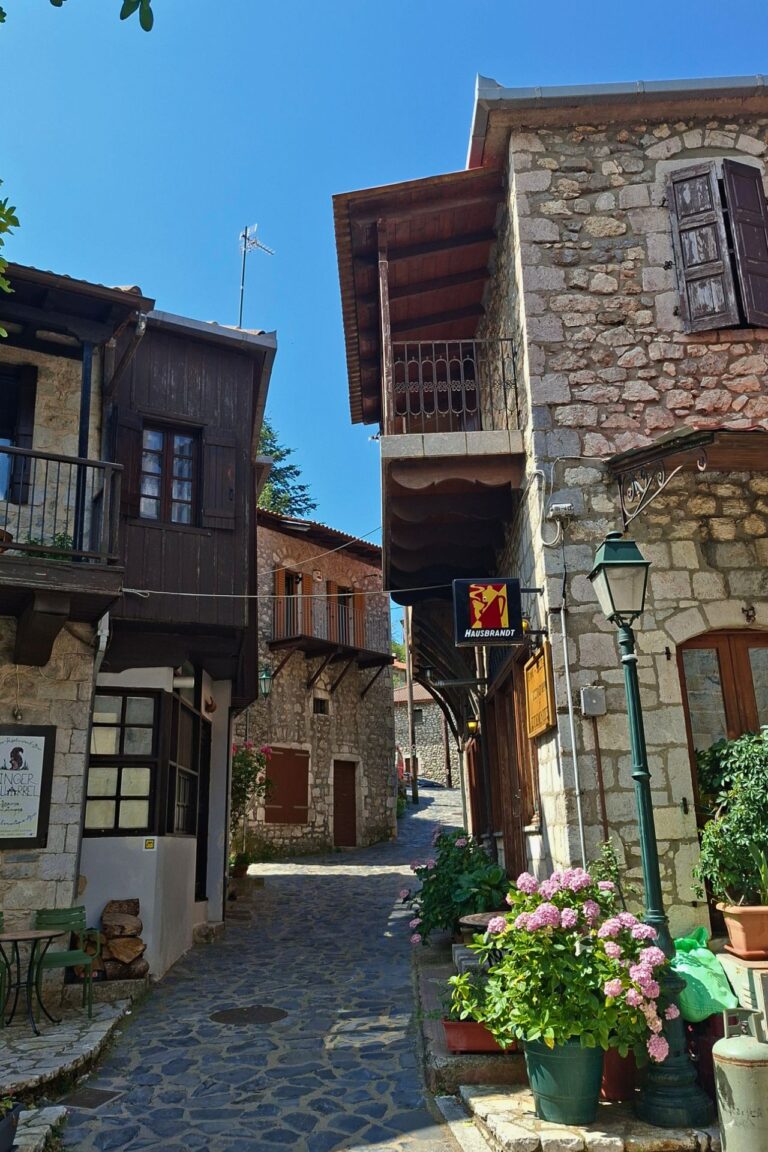
Most houses here are built from local stone, several of them tower houses of two and three storeys that are at least 300 years old. Whitewashed cobbled lanes and arched gates lead into flowered courtyards behind them. On the hill above the village stand the ruins of a castle raised in the 14th century by the Byzantine Despotate of Mystras, built to guard the mountain passage between Arcadia, Laconia and Argolis. In 1967 Kastanitsa was declared a protected traditional settlement, and renovations are still controlled to keep its character intact.
Don’t miss
- The Byzantine castle — 14th-century ruins on the hill above the village, built by the Despotate of Mystras.
- The tower houses — stone houses up to three storeys, some over 300 years old.
- The chestnut and fir forest surrounding the village, which gave Kastanitsa its name.
- The old cobbled lanes and arched gates of the protected village centre.
No members yet.
Browse our members Join the network