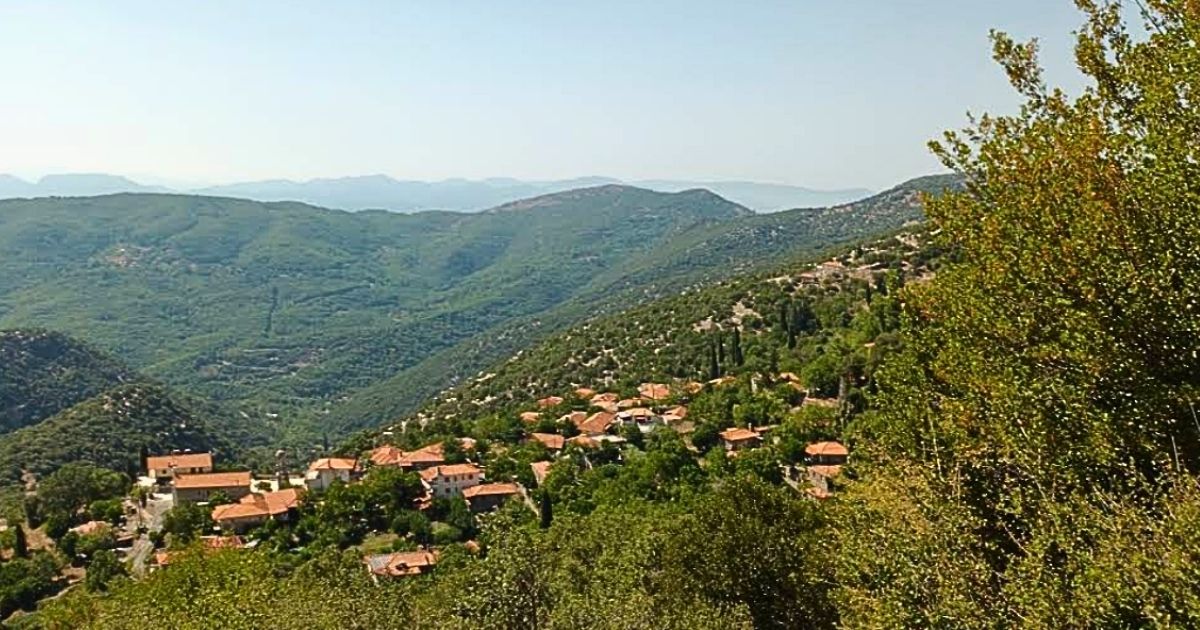
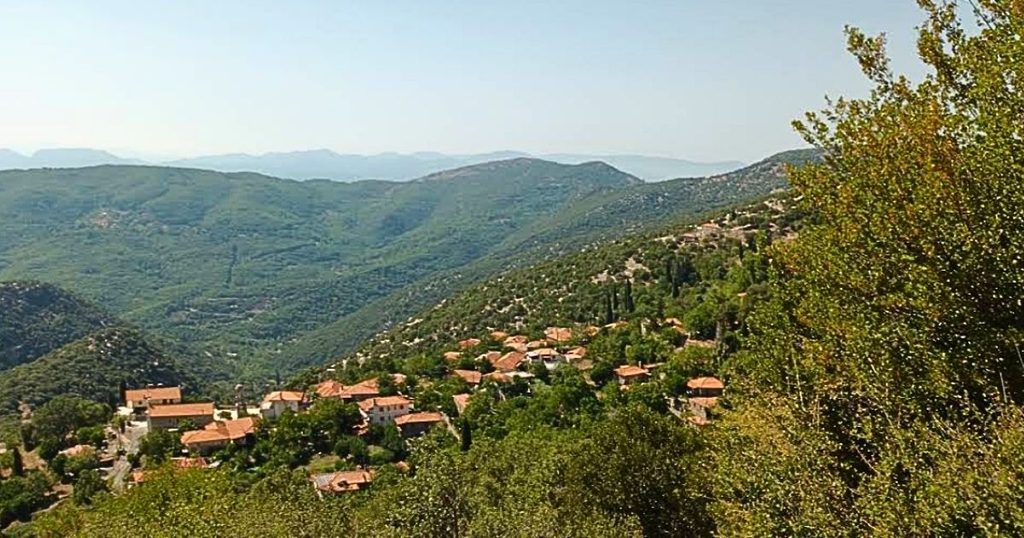
Vasta sits at 860 metres on the southern slopes of Mount Lykaion, in the municipality of Megalopolis. At its peak, in the late nineteenth and early twentieth century, the village held six to seven hundred people — stonemasons, herders, cobblers, schoolteachers. Today around forty-five call it home. The houses built for six hundred are still standing; most of the rooms behind their doors are not. (Read our post about Vasta Village here)
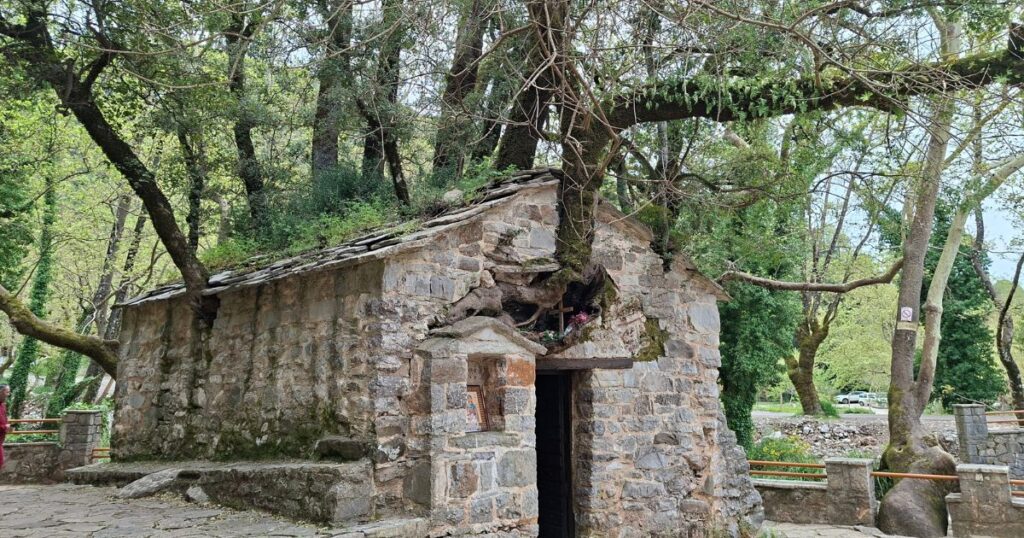
Agia Theodora
Six kilometres from the village stands one of Arcadia’s most singular churches: Agia Theodora, a small Byzantine chapel built, tradition holds, over the spring the saint called forth to save Vasta from a raiding army — and grown, ever since, with a row of oaks and plane trees rooted directly in its stone roof. Villagers and visiting hikers alike come as much for the sight of the trees threaded through the vaulted ceiling as for the spring still running beneath the church.
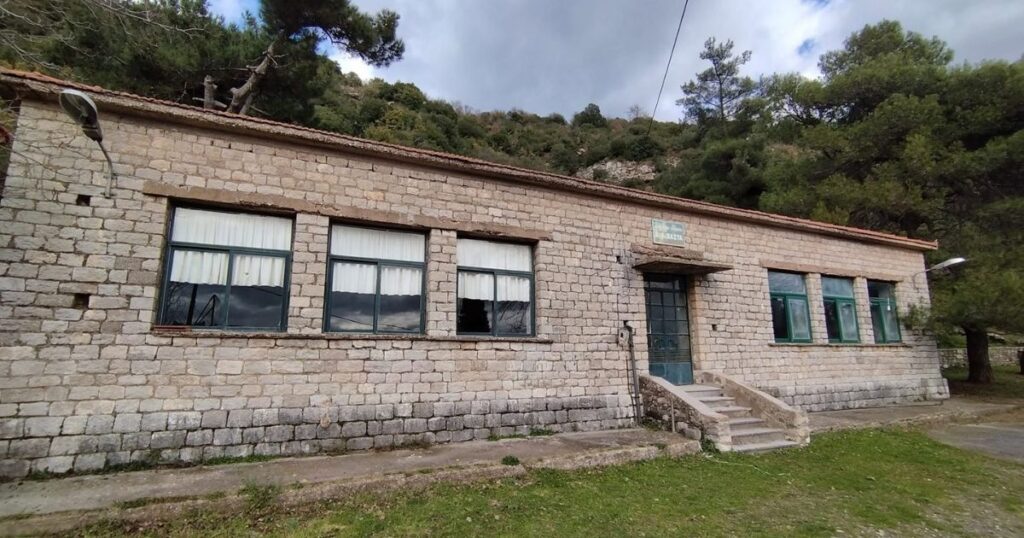
The village school
Vasta’s Dimotiko Scholio— the primary school — is one of the clearest measures of a village’s future. A school without enough children eventually closes; a village without a school rarely holds on to families afterward. Keeping it open is part of why the Network is looking closely at Vasta.
Prophet Elias, Mount Tetrazio
Above the village, on the summit of Mount Tetrazio, stands the whitewashed chapel of Prophet Elias — one of the hilltop chapels that mark high points across the Peloponnese, set, as tradition holds, where the prophet himself once called down fire. The climb is rewarded with a view that runs from the Lykaion massif down to the Megalopolis basin.
The Vasta–Isaris path
An old path connects Vasta to neighbouring Isaris across the shoulder of Mount Lykaion — the same route villagers once walked, and led mules along, between the two settlements. Today it is part of the waymarked Arcadia Trail, which links Vasta with Karytaina, Mount Lykaion and Isaris rather than leaving it an isolated stop.
The station at Isaris, and the train that once ran here
Before the old Peloponnese railway line was cut, Isaris had its own station — and it was how Vasta reached the wider world. Villagers walked or rode the mountain track down to catch the train toward Megalopolis and beyond, carrying produce to sell and returning with whatever the mountain didn’t grow. The rails are gone; the path down from Vasta to where the station stood is still there, and still walked.
Roam around Megalopolis.

Discover our members in Vasta.
No members yet.